Mayor Confirms Rise Will Take Effect in March, While Bus and Tram Fares Remain Frozen
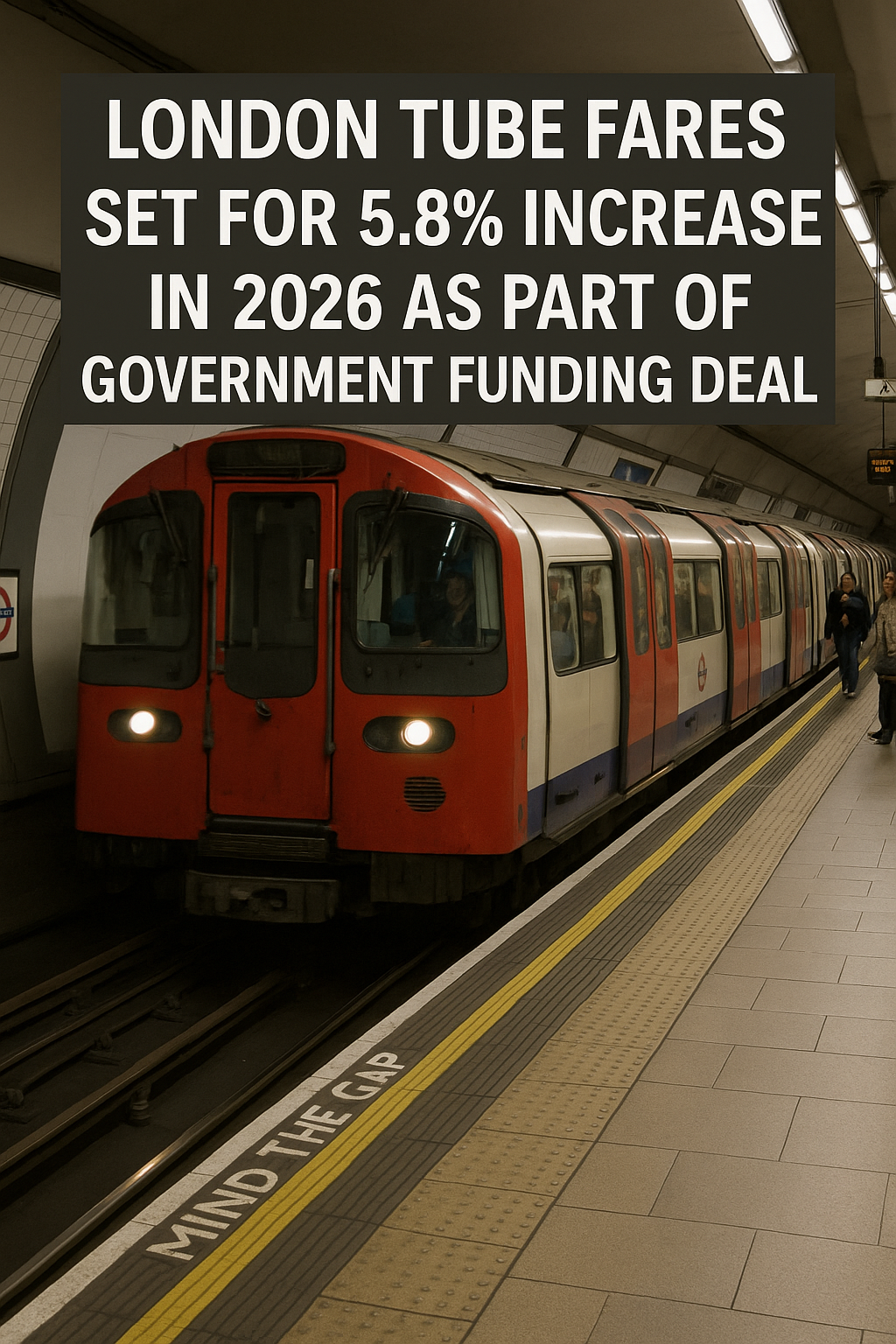
Londoners will face higher travel costs on the Underground next year, as Mayor Sadiq Khan has confirmed that Tube fares will rise by 5.8% in 2026. The increase, scheduled to take effect in March, places fares one percentage point above the current rate of inflation, marking a significant development for daily commuters and occasional travellers across the capital.
The announcement comes despite the recently declared freeze on national rail fares, which will not apply to Transport for London (TfL) services. Instead, the increase will impact passengers who rely on the Tube and TfL rail services, while other parts of the network will remain unaffected.
Why Tube Fares Must Rise: Funding Conditions from Central Government
Part of £2.2bn Capital Funding Agreement
The mayor explained that the rise is tied directly to a condition set by the UK government as part of a £2.2 billion capital funding deal agreed during the June spending review. Under the terms of the agreement, TfL is required to increase fares by an amount equivalent to one percentage point above the Retail Price Index (RPI) rate of inflation.
This requirement, Sadiq Khan said, leaves the city with little flexibility in shaping fare policy for the Tube and TfL rail services. “The rise equivalent to one percentage point above the RPI rate of inflation was a condition of the £2.2bn capital funding deal that TfL agreed with central government,” he noted.
Impact on TfL Finances
TfL continues to manage financial pressures that began during the COVID-19 pandemic, which significantly reduced passenger numbers and revenue. While ridership has gradually increased, TfL’s long-term financial stability remains dependent on sustained government support and careful fare structuring.
The fare increase is expected to contribute to ongoing capital investment and network improvements, though the mayor emphasized that affordability measures remain a priority.
What Will Change in March 2026
Tube and TfL Rail Fares to Rise
Only fares on the London Underground and TfL rail services will increase next March. This includes:
-
Pay-as-you-go fares on the Tube
-
Trips on TfL-operated trains such as the Elizabeth line, London Overground, and the DLR
However, Sadiq Khan said that increases on pay-as-you-go Tube fares will be subject to strict limits to reduce the burden on passengers.
Capped Increase for Pay-As-You-Go Users
The mayor announced that individual pay-as-you-go Tube fares will rise by no more than 20p, with many increasing by just 10p. This cap is aimed at ensuring that travellers who rely on flexible, contactless payments do not face excessive increases.
What Will Not Change: Travelcards, Buses, and Trams
Travelcard Prices Frozen Until 2027
In contrast to the Tube fare increases, Travelcard prices will remain frozen until March 2027. This includes:
-
Daily caps
-
Weekly caps
-
All full Travelcard products
Freezing these prices helps to shield frequent travellers from rising travel costs, particularly those who rely on weekly or monthly passes for their commute.
Bus and Tram Fares Also Frozen
One of the most notable measures announced by the mayor is the continued freeze on bus and tram fares until July 2026, which he described as an “emergency cost-of-living measure” funded directly by City Hall.
“This is the seventh time I’ve been able to freeze bus and tram fares, and it will particularly benefit those on the lowest incomes in our city,” Sadiq Khan said.
The freeze is designed to help ease financial pressure on Londoners at a time when many households are still facing heightened living costs, including rising prices in housing, food, and utilities.
Context: Navigating Affordability in a Cost-of-Living Crisis
Supporting Low-Income Londoners
Buses and trams remain the most widely used modes of public transport for Londoners on lower incomes. The continuation of the fare freeze across these services is expected to deliver meaningful savings for residents who rely on them daily for work, education, and essential travel.
By contrast, Tube fares—used heavily by passengers in central London and many commuters traveling longer distances—are being adjusted in line with government requirements.
Balancing Investment and Affordability
The mayor’s plan reflects a balancing act between maintaining affordability for everyday travellers and securing critical funding for maintaining and improving London’s transport network.
TfL’s capital funding deal from Westminster is essential for projects such as:
-
Upgrading signalling systems
-
Improving accessibility
-
Maintaining existing infrastructure
-
Supporting environmental and sustainability initiatives
However, the funding conditions require Sadiq Khan to raise certain fares as part of the city’s contribution to these improvements.
How the 2026 Fare Rise Fits Into the Bigger Picture
Long-Term Fare Strategy Under Khan’s Leadership
Since taking office, Sadiq Khan has made fare freezes a core part of his administration’s transport policy. His decision to freeze bus and tram fares for the seventh time underscores a continued emphasis on protecting those most affected by rising living costs. However, the constraints placed by government funding agreements have limited the mayor’s ability to extend freezes to all modes of transport.
The 5.8% increase marks one of the more significant jumps in recent years, particularly for the Tube, which has historically seen periodic fare adjustments but rarely at such a scale.
Public Reaction and Future Considerations
While some Londoners are likely to welcome the freeze on buses, trams, and Travelcards, others may express concern about rising Tube costs, especially commuters who travel regularly into central London.
The mayor has framed the fare increase as a necessary move imposed by central government rather than an independently chosen policy. Still, the impact on passengers will likely remain a key topic of debate in the lead-up to March 2026.
Conclusion: What Londoners Should Expect
With the fare increase set for March 2026, Londoners should prepare for slightly higher costs on the Underground and TfL rail services, while continuing to benefit from frozen fares on buses, trams, and Travelcards.
The 5.8% rise—driven by conditions tied to essential government funding—signals both ongoing financial challenges and the city’s effort to maintain affordability wherever possible. As London continues to navigate economic pressures, transport costs will remain a central issue for residents, policymakers, and the transit authority in the months ahead.