Remembering Friends Lost to Mental Health Struggles
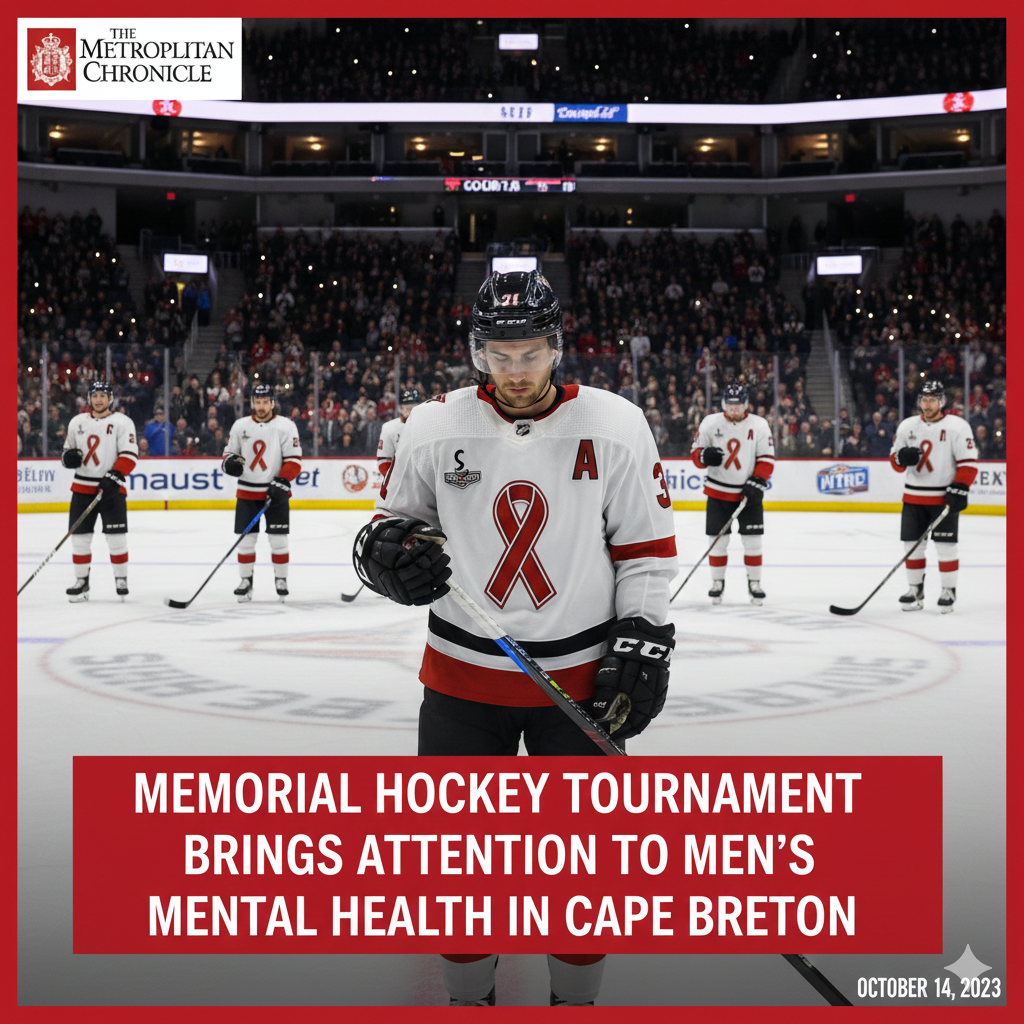
A group of high school friends in Coxheath, Nova Scotia, are coming together this holiday season to honor three men who tragically lost their lives to mental health challenges. Tyler MacEachern, Joey Mahon, and Matthew Keating, who grew up playing hockey together and graduated from Riverview Rural High School in 2008, are being remembered through the Breton Brothers Memorial Hockey Tournament.
The annual event, now in its third year, has become a platform not only to commemorate the lives of the three men but also to raise awareness about the importance of mental health support for men.
Organizers Speak: Turning Loss Into Awareness
Stuart MacNeil on the Tournament’s Purpose
“Whenever I think of those guys, I think of their smiles, how outgoing and fun they were,” said Stuart MacNeil, one of the organizers and a participant in the tournament. He noted that the tournament has also served as a space for reflection on mental health within their community.
MacNeil revealed that one of the participants from the inaugural tournament has since passed away, highlighting the urgency of fostering conversations around mental health. “We didn’t anticipate him to be feeling that way unfortunately. So, with that thought, we thought, ‘Who else is in the room struggling?’”
A Family’s Commitment: The Three Brothers Project
Matthew Keating’s older brother, Mike Keating, founded the Three Brothers Project in his sibling’s memory. The initiative focuses on men’s mental health and has played a pivotal role in organizing the tournament.
“I think he’d be proud that all these guys are coming together,” Mike Keating said. “All the players out there on the ice are going to know that we’re playing in memory of our brothers, but we’re also playing for each other in the sense we’re letting each other know that it’s OK to have these conversations about mental health — that it’s OK not to be OK.”
Community Support and Philanthropy
Cape Breton Regional Hospital Foundation Involvement
Caitlyn MacDonald, manager of philanthropy at the Cape Breton Regional Hospital Foundation, who also attended high school with the three men, emphasized the charitable aspect of the tournament.
“This year, the funds are going to support the mental health and addictions patient care fund through the Cape Breton Regional Hospital Foundation,” she said. “This tournament is kind of a way to honour them and remember them and also a way for us to raise funds for others in our community who might be struggling as they were at one time.”
The tournament thus serves a dual purpose: remembering friends and providing tangible support for local mental health resources.
A Sense of Community and Tradition
Returning to Their Roots
MacNeil noted that holding the tournament at the County Arena, right next to the high school they all attended, enhances the sense of nostalgia and community.
“I saw guys this summer, at the Big Fiddle concert, saying ‘Hey, Dec. 23, tournament, can’t wait. Christmas tradition,’” he said.
The organizers hope to continue building the event each year, using hockey as a medium to foster conversations about men’s mental health and create a safe space for participants to share their struggles.
Message to the Community
MacNeil emphasized the importance of awareness and support: “We’re going to keep this event going, keep building and growing, and try to bring more awareness to the guys in the dressing room that if you’re not doing OK, you can get help.”
Conclusion: Sport as a Vehicle for Healing
The Breton Brothers Memorial Hockey Tournament exemplifies how communities can channel grief into meaningful action. By combining sport, remembrance, and philanthropy, the event not only honors the memories of Tyler MacEachern, Joey Mahon, and Matthew Keating but also encourages open dialogue around men’s mental health.
Through initiatives like the Three Brothers Project and the tournament, organizers hope to ensure that men facing mental health challenges know they are not alone, and that reaching out for support is both acceptable and encouraged.
This annual event has become more than a hockey tournament—it is a reminder that community, conversation, and compassion can save lives.