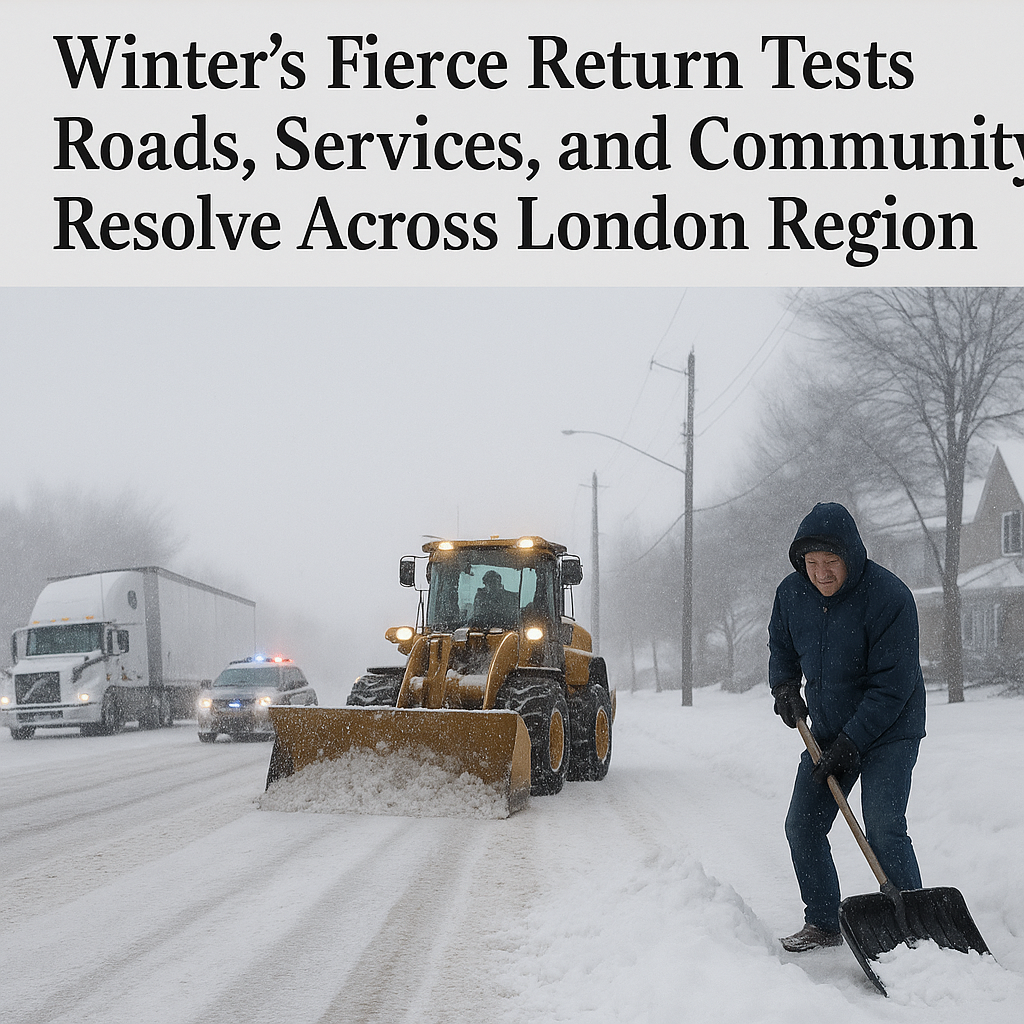
A City Digging Out Again
For the second straight day, London and the surrounding region found themselves wrestling with a potent December blast that brought heavy snow, bone-chilling temperatures, and a cascade of disruptions. Roads clogged. Schools shuttered. Emergency crews scrambled. And through it all, residents did what residents do in storms like this—dug out, pushed on, and tried to make sense of another early-season winter barrage.
The storm made its presence felt before dawn and refused to relent. Drivers faced treacherous highways, families juggled altered school plans, and workers once again prepared for a long day behind plows, ambulances, and emergency vehicles. As one snow removal operator put it with weary understatement, “We’re out there. We’re doing the best we can.”
This round of snowfall wasn’t remarkable just for its volume. Its unpredictable intensity—delivered in bursts of squalls—created what one meteorologist famously called “nature’s version of surprise traffic planning.” And Londoners, never short on resolve, found themselves adapting quickly.
Highway Hazards and Close Calls
Major Crashes Bring the 401 to a Halt
The most alarming scenes developed along Highway 401, where frigid temperatures iced over pavement with a speed that caught many by surprise. Within minutes, visibility dropped and the roadway turned into what one driver described as “a skating rink with tail lights.”
A tractor-trailer jackknifed just east of Wonderland Road, blocking lanes and triggering a chain reaction of slowdowns. Barely half a kilometre beyond that, another multi-vehicle collision unfolded. One vehicle began leaking a hazardous substance, prompting an urgent response from emergency crews already stretched thin.
Miraculously, early indications suggested that none of the injuries were life-threatening. Still, the two crashes forced the closure of all eastbound lanes—an inconvenience, yes, but also a reminder of how fragile winter mobility can be when storms roll in with attitude.
Emergency Teams Work Against the Clock
Those responding to the incidents faced conditions that shifted minute by minute. Patrol officers, paramedics, and hazmat specialists navigated swirling snow and freezing gusts while coordinating traffic reroutes. One veteran responder quipped, “You know it’s bad when even the radio static feels cold.”
The highway cleanup extended well into the afternoon, complicating commutes and adding stress to an already strained transportation network.
City Streets: Slow but Steady
Snowplow Operators Push Through Exhausting Shifts
Inside London’s city limits, main roads remained passable thanks to an all-hands-on-deck approach from municipal plow crews and independent contractors. Many had worked late into Wednesday night only to return again before sunrise Thursday.
Chris Harrison of Elite Lawn Care & Snow Removal described the challenge with the mix of determination and fatigue familiar to anyone who has ever spent an entire night in a plow truck. “With these successive snowfalls and the squalls, it is unpredictable,” he said. “So, we’re out there. We’re doing the best we can.”
The west end of the city bore the brunt of accumulation, with drifts rising nearly as fast as plows could push them aside. Harrison likened it to “painting a wall that keeps adding new wall.”
A Fictional Glimpse Behind the Windshield
During one particularly intense squall, Harrison recalled—half amused, half exhausted—stopping briefly at a gas station. A fellow operator shouted across the pump, “Think the snow’s planning to stop?” Harrison replied, “Sure, right after I retire.” The two laughed, tightened their gloves, and climbed back into their machines. Even in storms, camaraderie thrives.
School Decisions: Open Here, Closed There
Mixed Approach Across the Region
For a second straight day, several school boards surrounding London opted to cancel classes entirely. The combination of poor visibility and slick rural roads made the choice an easy one for administrators.
Inside London, however, schools remained open. That did not mean the morning commute was serene. A school bus in Byron slid partially off the road—an incident that could have been far worse given the conditions. Early reports suggested no injuries.
Crossing Guards Step Up
On the sidewalks, crossing guards faced their own slippery battles. Betty Wade, stationed at a typically busy intersection, arrived early only to find sidewalks buried under deep, wind-packed snow. With the city’s sidewalk crews overwhelmed, she took matters into her own hands—literally.
Holding her stop sign in one gloved hand and a shovel in the other, Wade carved out enough space to ensure children could cross safely. “I haven’t seen a winter start like this in years,” she said, rubbing her aching arms. “This is early.”
Her commitment offers a quiet illustration of civic responsibility—proof that big storms often reveal small, heroic gestures.
Neighborhoods Dig Out Together
The Human Side of Heavy Snow
While snowblowers hummed across much of the region, pockets of the city relied on decidedly low-tech methods. Along Notre Dame Crescent, resident John Capstick wielded a scoop shovel, his breath visible in the frigid air.
Capstick, who joked about his love-hate relationship with winter, eyed the street with a mix of anticipation and dread. “Well, he’s going to come by and plow me in,” he said of the approaching city plow. His tone carried both resignation and humor—something Londoners often lean on this time of year.
A few doors down, longtime residents Jim and Heather Kicks tackled their driveway with steady efficiency. No snowblower. No machinery. Just two shovels and decades of experience.
“I’m 78. She is 71,” Jim said. “Between the two of us, we’re sensible about it. We don’t go crazy at it. And we get it done!” Heather nodded, adding, “If you need a break, you stop. And if you’ve got a heart condition, get a snowplow.”
Their matter-of-fact approach echoed the spirit of the neighborhood—resilience sharpened by many long winters.
A Neighborhood Moment Worth Noting
At one point, a younger neighbor trudged over and offered to help the couple finish a stubborn drift. Jim declined with a grin, saying, “If I stop shoveling, I’ll rust.” The neighbor laughed, promised to check back later, and continued down the street. Moments like these offer a quiet reminder that harsh weather often brings people closer.
Embracing the Season
A Winter That Feels Like the Old Days
Despite everything—the delays, the strain on emergency services, the aches and cold—many longtime residents found themselves reflecting on the storm with a touch of nostalgia. “It’s a good old-fashioned winter!” Jim said, smiling broadly.
For some, this sudden return to deep snow recalls childhood winters when snowbanks towered over sidewalks and school cancellations were celebrated like small holidays.
Resilience in the Face of Nature’s Force
Storms like this test a city. They test schedules, patience, and infrastructure. But they also showcase collective resolve. Plow operators push through exhausting shifts. Emergency crews work tirelessly. Residents lend helping hands. And through it all, Londoners keep moving forward.
Conclusion: A Storm That Revealed More Than Snow
This week’s snowfall left more than slippery roads and heavy drifts in its wake. It highlighted a community’s adaptability, humor, and grit. It reminded drivers to respect winter’s unpredictability. And it revealed once again that, even when nature deals a tough hand, the people on the ground—those shoveling sidewalks, steering plows, guiding children, or responding to crashes—make the difference.
As British writer Jerome K. Jerome once joked, “I like work; it fascinates me. I can sit and look at it for hours.” But for the many Londoners who spent this week working through relentless snowfall, there was no such luxury. They didn’t watch the storm—they met it head-on. And in doing so, they showed what a city can accomplish when everyone works, quite literally, to dig out together.