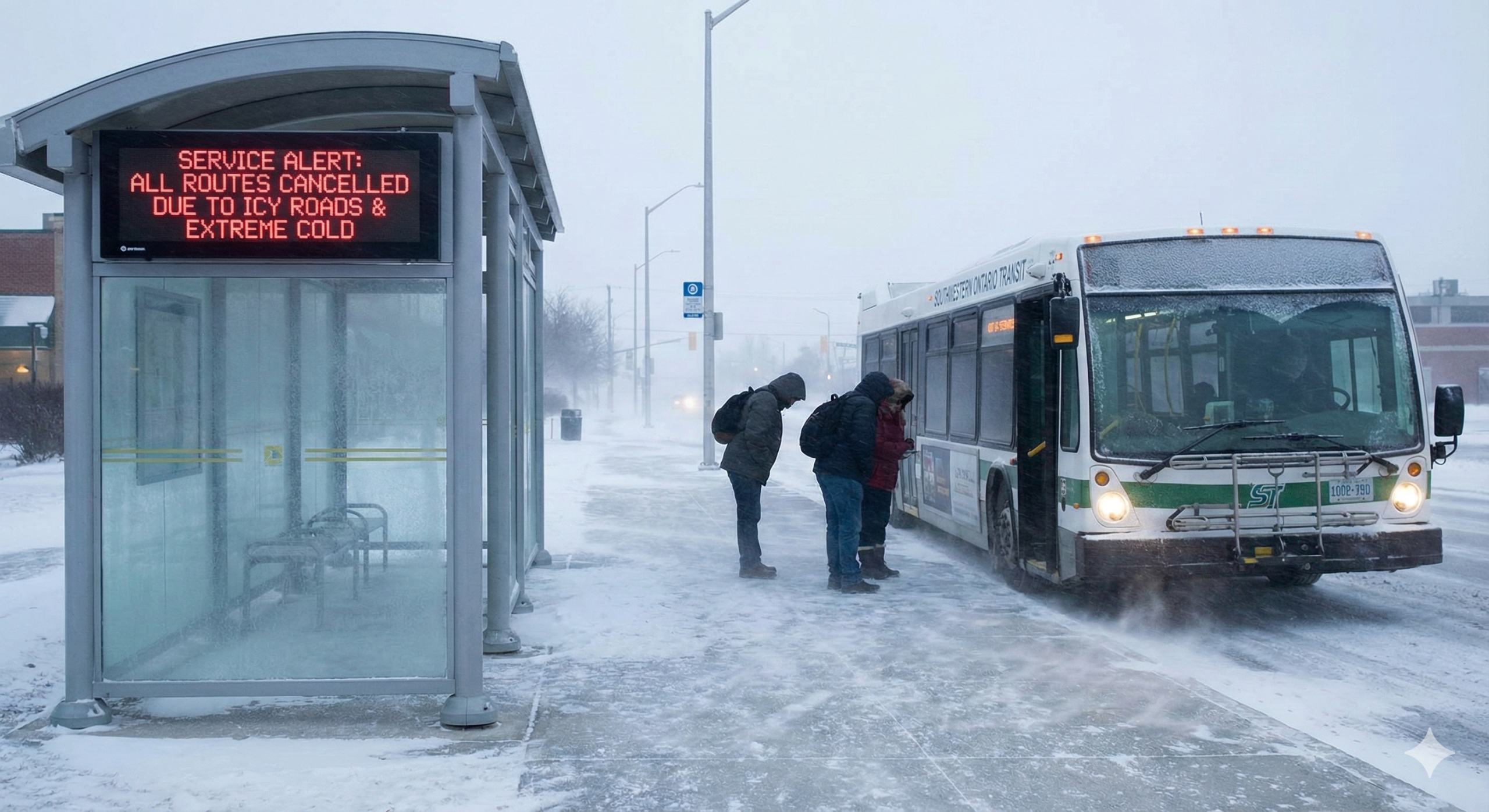
A sharp drop in temperatures early Friday prompted widespread transportation disruptions across southwestern Ontario, as Environment Canada issued a Special Weather Statement warning residents of rapidly deteriorating road and sidewalk conditions. The sudden cold snap has caused rain and melting snow to refreeze, creating icy and slippery surfaces that pose risks to commuters, pedestrians, and school transportation services.
As a precaution, school purpose vehicle transportation was cancelled for multiple regions, including Middlesex, Oxford, and Elgin counties, as well as the designated Red Zone. Officials emphasized that the decision was made in the interest of student safety, given the unpredictability of road conditions during the morning hours.
Despite the cancellations, regular city bus routes in London were scheduled to operate normally, though transit authorities urged riders to allow extra travel time and exercise caution at stops and terminals.
Environment Canada Warns of Flash Freeze Conditions
Environment Canada meteorologists say the primary concern stems from rapidly falling temperatures, which can cause wet surfaces to freeze quickly, often before road crews can respond.
“When temperatures fall this quickly, even roads that appeared clear late at night can become extremely slippery by early morning,” the agency said in its advisory. “Sidewalks, parking lots, bridges, and untreated roads are especially vulnerable.”
The weather statement applies to much of southwestern Ontario, including urban centres, rural highways, and school bus routes that cover long stretches of secondary roads. In many areas, temperatures dropped several degrees in just a few hours, increasing the likelihood of black ice, one of the most dangerous winter driving hazards.
School Bus Cancellations Aim to Reduce Risk
School boards and transportation consortia across the affected regions moved swiftly to cancel school purpose vehicles, citing concerns over student safety, particularly in rural and semi-rural areas.
Bus routes in counties like Middlesex, Oxford, and Elgin often involve gravel roads, open farmland, and elevated surfaces that are prone to freezing faster than city streets. Officials noted that even experienced drivers can struggle to maintain control under such conditions.
While buses were cancelled, schools themselves may remain open, and parents were encouraged to check with their local school boards for updates regarding attendance expectations and policies.
Transportation officials stressed that cancellations are never taken lightly but are necessary when weather conditions pose an elevated risk.
“Our priority is always the safety of students and drivers,” one regional transportation coordinator said. “When conditions are unpredictable and deteriorating rapidly, it’s better to err on the side of caution.”
City of London Transit Operating with Caution
Unlike school transportation, London’s city bus routes were not cancelled, and services were expected to begin on schedule. However, the London Transit Commission reminded passengers that winter conditions can still cause delays, especially during peak morning hours.
Transit officials urged riders to:
-
Arrive early at bus stops
-
Wear footwear with good traction
-
Use handrails when boarding and exiting buses
-
Be patient if schedules are impacted by traffic conditions
Drivers were instructed to reduce speeds where necessary and maintain safe following distances. Crews were also monitoring conditions in real time, particularly on hills, bridges, and less-travelled routes.
Road Crews and Municipal Response
Municipal road maintenance crews were dispatched overnight and early Friday morning to salt and sand major routes. However, officials acknowledged that rapid temperature changes can overwhelm even well-prepared operations.
Salt is most effective within a certain temperature range, and when temperatures drop too quickly, it may take longer to work. In addition, freezing rain or residual moisture can refreeze repeatedly, creating slick patches even after treatment.
Residents were advised to report hazardous road conditions to their local municipalities and to avoid unnecessary travel during the morning commute if possible.
Increased Risk for Pedestrians
Pedestrians are also being urged to take extra precautions. Icy sidewalks and driveways are a leading cause of winter injuries, particularly among seniors.
Public health officials recommend:
-
Wearing ice grips or traction cleats
-
Taking smaller steps and walking slowly
-
Keeping hands free for balance
-
Using well-lit, well-maintained walkways
Hospitals often see an increase in slip-and-fall injuries following flash freeze events, placing additional strain on emergency departments during the busy holiday season.
Holiday Travel Adds to the Challenge
The weather advisory comes at a particularly busy time, as many residents are travelling for holiday shopping, school events, and family gatherings. Increased traffic combined with poor road conditions raises the risk of collisions.
Police services across southwestern Ontario issued reminders urging drivers to:
-
Slow down and increase following distances
-
Avoid sudden braking or sharp turns
-
Keep headlights on during low visibility
-
Ensure vehicles are equipped with winter tires
Drivers were also reminded that bridges and overpasses freeze faster than surrounding roadways.
Looking Ahead: What to Expect
Meteorologists say conditions may improve later in the day as road crews continue treatment and daytime temperatures stabilize. However, refreezing remains possible overnight, particularly in areas where melting occurs during daylight hours.
Environment Canada advised residents to continue monitoring forecasts and advisories, as additional warnings may be issued if conditions worsen or new weather systems move into the region.
Staying Informed
Residents are encouraged to:
-
Check local school board and bus consortium websites
-
Monitor Environment Canada updates
-
Follow municipal and transit authority announcements
-
Listen to local radio and news outlets for real-time updates
As winter settles in, officials remind the public that flexibility and caution are key.
“Winter weather is unpredictable, especially during temperature swings,” officials said. “A few extra minutes of preparation and patience can make a big difference in keeping everyone safe.”