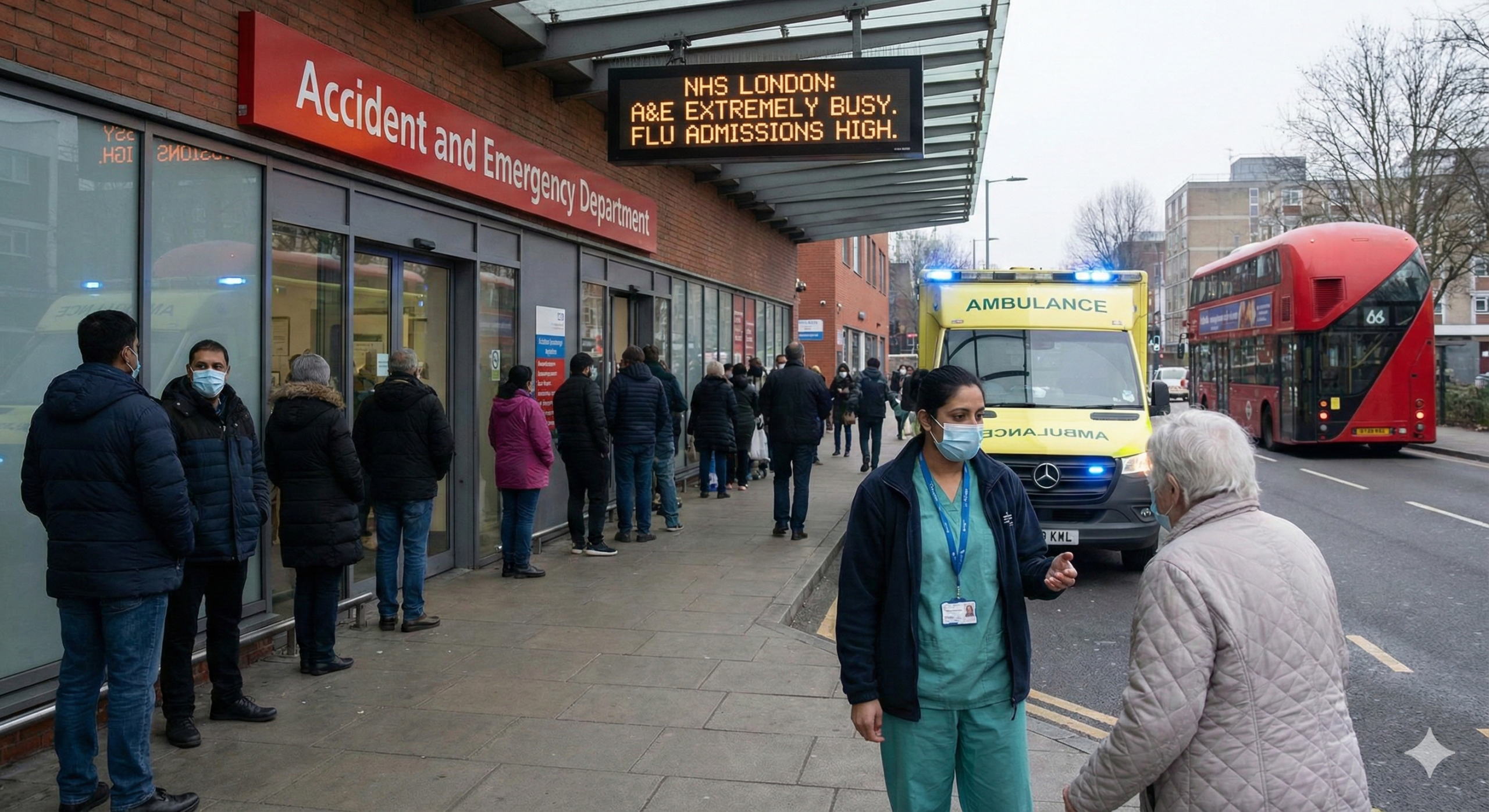
Public health officials in the London region are sounding the alarm after an unusually early surge in influenza cases, a trend that mirrors rising flu activity across much of the country. Infection rates, hospital admissions, and test positivity levels are all climbing at a faster pace than typically seen at this time of year, prompting renewed calls for vaccination and preventative measures as the holiday season approaches.
Health experts say the early onset of flu season is already placing noticeable pressure on hospitals, pharmacies, and long-term care facilities, with vulnerable populations bearing the greatest risk.
Flu Season Arrives Earlier Than Expected
While influenza activity typically intensifies later in the winter months, this year’s pattern has deviated from the norm. Local health authorities report a sharp increase in flu cases weeks earlier than anticipated, catching both residents and healthcare providers off guard.
Rapid Rise in Infections and Hospitalizations
According to the Middlesex-London Health Unit (MLHU), the most recent surveillance data shows a significant spike in influenza cases between Nov. 30 and Dec. 6. During that period alone, 159 cases of influenza A and one case of influenza B were confirmed. Since August, the region has recorded a total of 486 influenza cases.
Hospitalizations are also rising. MLHU reported 39 new influenza-related hospital admissions in the first week of December, a figure that highlights the growing severity of the outbreak. Perhaps most concerning is the test positivity rate, which has climbed to nearly 30 per cent among patients tested, indicating widespread community transmission.
Public Health Officials Closely Monitoring Trends
Dr. Andrew Lam, Senior Public Health Resident with MLHU, said the early surge is being carefully tracked as officials compare this season’s trajectory to previous years.
“We’re starting to see an earlier rise in the number of influenza cases compared to last year, for example,” Lam explained. “We’re seeing an increase week after week, and that’s something we’ve been noticing consistently over the last several weeks.”
Dr. Lam added that the sustained upward trend suggests flu activity may continue to intensify as the region moves deeper into winter.
Pharmacies See Renewed Interest in Vaccination
As flu cases climb, local pharmacies are once again becoming a focal point for prevention efforts, particularly as public awareness of the surge grows.
Early Demand Tapered, But May Rise Again
Scott Coulter, a pharmacist at Coulter’s Pharmacy on Dundas Street East in London, said this year’s flu vaccination campaign started strong before slowing down.
“We were quite busy at the beginning of the season,” Coulter said. “Then things tapered off, which is fairly typical. But with cases spiking now, we expect that could change quickly.”
Coulter noted that many people respond directly to what they see happening around them, especially when friends, family members, or coworkers fall ill.
“People are responding to the news, no doubt about that,” he said. “They’re responding to the fact that their friends and loved ones are getting very sick with the flu as well.”
Vaccination Still Strongly Recommended
Health officials and pharmacists alike continue to stress that it is not too late to get vaccinated. Coulter emphasized that pharmacies are well-prepared to handle an increase in demand if more residents decide to get their flu shot.
“We hope to see as many people vaccinated as possible,” he said. “We’re certainly prepared if that happens.”
Hospitals Feel the Strain, Especially Pediatric Care
The early flu surge is already being felt inside hospitals, with emergency departments experiencing higher-than-usual patient volumes.
Children Often Hit First
Dr. Rod Lim, Medical Director of the Children’s Emergency Department at London Health Sciences Centre (LHSC), said children are often among the first groups affected when influenza begins circulating widely, and this season has followed that pattern.
“We’ve seen up to almost 200 patients in a day, mostly with flu-like symptoms,” Lim said. “We’ve definitely felt the impact of the flu this year, like we do every year, but the volume has been significant.”
The increase in pediatric cases places additional strain on hospital resources, particularly during a time when emergency departments are already managing high demand.
Protecting Vulnerable Patients
Dr. Lim also pointed out that some of the most vulnerable individuals at LHSC include elderly patients and those undergoing treatment for serious illnesses. For these populations, influenza can lead to severe complications.
To reduce the risk of transmission within healthcare settings, LHSC is strongly encouraging the use of masks in clinical areas. The measure is intended to protect both patients and staff as flu activity continues to rise.
Long-Term Care and Congregate Settings at Risk
The impact of the early flu surge is not limited to hospitals and clinics. Public health officials say congregate living environments are experiencing increased outbreaks as well.
Outbreaks Reported in Southwestern Ontario
In neighbouring Oxford and Elgin counties, public health officials are also warning of very high influenza risk levels. Joanne Andrews, Infectious Disease Manager with Southwestern Public Health (SWPH), said multiple facilities are currently dealing with outbreaks.
“We’re seeing the impact not only in hospitalizations, but also outbreaks in our long-term care homes and retirement homes,” Andrews said. “Right now, in the Southwestern Public Health region, we have five facilities experiencing an influenza A outbreak.”
These settings are particularly vulnerable due to close living conditions and residents who may already have underlying health issues.
Heightened Prevention Measures in Care Facilities
Public health authorities are urging long-term care homes and retirement residences to maintain strict infection control practices, including enhanced cleaning, masking when appropriate, and limiting exposure when outbreaks are identified.
Families are also being encouraged to postpone visits if they are experiencing flu-like symptoms, helping to reduce the risk of introducing the virus into high-risk environments.
Holiday Season Raises Additional Concerns
As flu activity increases, health experts are keeping a close eye on the calendar. With holiday gatherings approaching, there is concern that increased travel and social interaction could accelerate transmission.
Peak Expected Around Late December
Dr. Lam said current projections suggest flu season could peak by late December, potentially coinciding with holiday celebrations.
“We anticipate this to continue for a few more weeks as we enter a peak of influenza activity,” he said.
Large gatherings, indoor events, and increased contact between different age groups could all contribute to further spread if preventative measures are not taken seriously.
Simple Precautions Can Make a Difference
Health officials continue to emphasize the importance of basic prevention strategies, including staying home when sick, practicing good hand hygiene, and wearing masks in crowded or clinical settings when appropriate.
Vaccination remains the most effective tool for reducing the risk of severe illness, hospitalization, and complications from influenza.
Conclusion: Vigilance Urged as Flu Activity Intensifies
The early surge of influenza cases across the London region serves as a clear warning that this flu season may be more intense than usual. With rising infection rates, increased hospitalizations, and outbreaks in congregate settings, health officials are urging residents to take the situation seriously.
From getting vaccinated and wearing masks in healthcare environments to staying home when ill, individual actions can play a crucial role in protecting the community. As the region approaches what could be a holiday-season peak, public health leaders stress that preparedness and prevention will be key to reducing the impact of influenza in the weeks ahead.